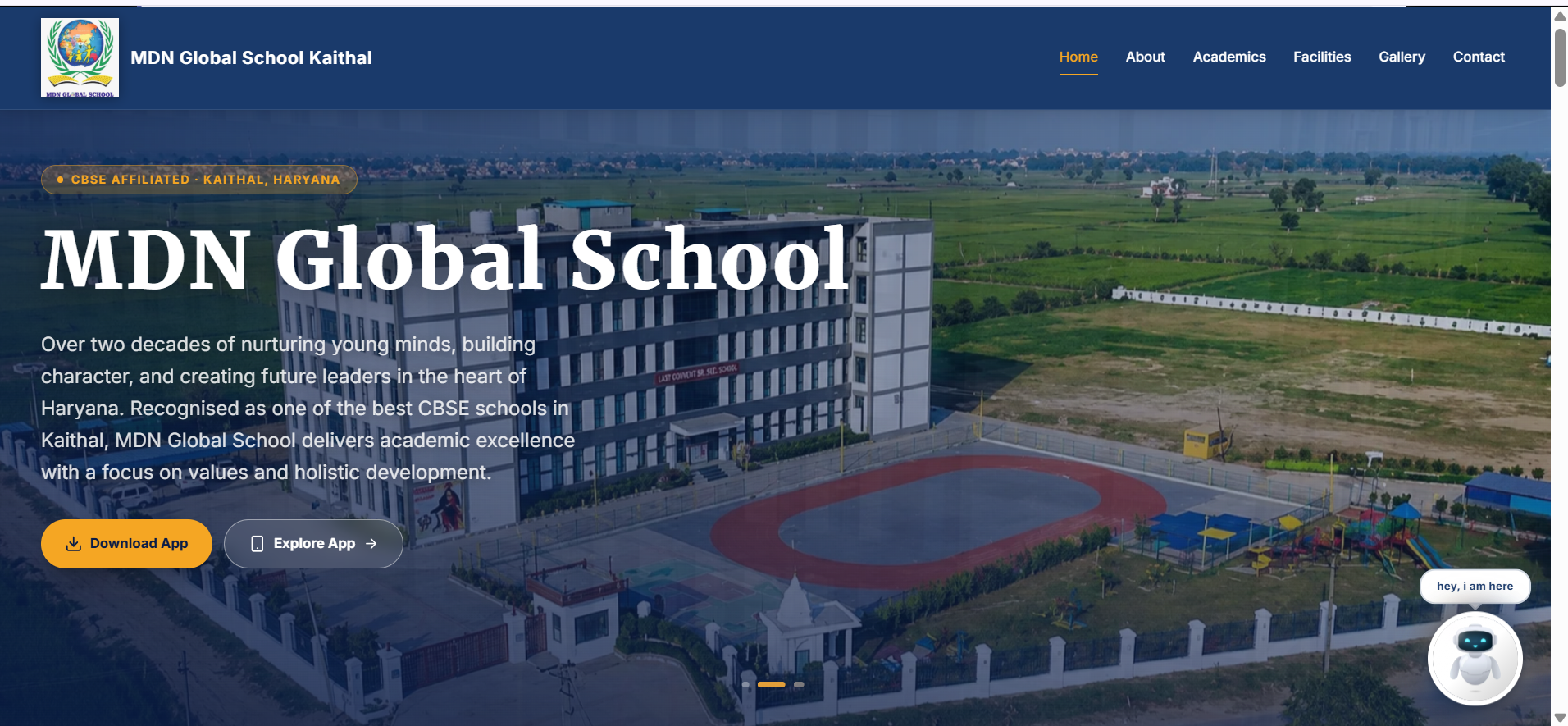
From homepage to a Groq-powered AI chatbot, a Resend contact form and a robot tour — here is how MDN Global School in Kaithal, Haryana, got its digital presence built by describing it instead of writing code from scratch.
What vibe coding actually is
Vibe coding means building a product by describing what you want in plain language while an AI assistant writes the actual code. You focus on the idea, the look and the flow — the tool handles the syntax, files and errors.
It is not 'no work'. It is different work: instead of memorising syntax, you practice explaining clearly, looking closely at the result and giving good feedback. That is exactly how the MDN Global School website got built.
The trick is a tight loop: you say what you want, the AI produces a first version, you open the preview, and you tell the AI exactly what to change. Each round takes seconds, which means you can try many ideas quickly without fear of breaking anything.
The platforms I used
Lovable — great for fast, polished UI from a single prompt. You describe a page and it generates the interface, perfect for early ideas and prototypes.
Replit — a browser-based coding environment with an AI agent built in. Useful when you want to write, run and test code without installing anything on your machine.
OpenCode — an AI coding assistant that runs on my computer and can read, edit and actually run the project files. This was my main tool for refining the school site and debugging it.
GitHub — to save each version of the project, and Vercel — to deploy the live website for free. Together they made the site truly public and shareable.

Inside the website
MDN Global School needed one clean online home where parents and students could find everything: a welcoming homepage, a step-by-step admissions process, an academics overview, and easy contact details.
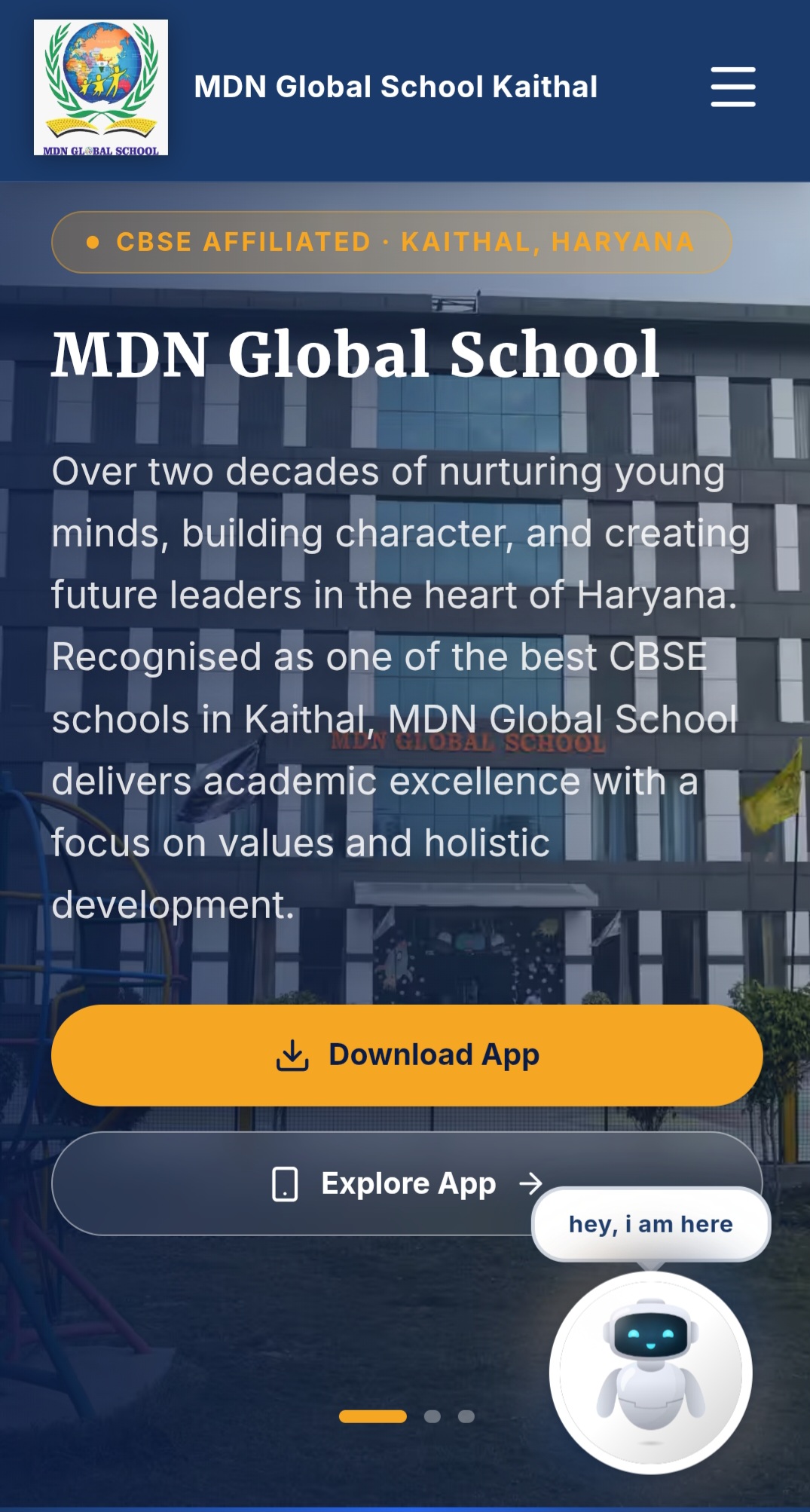
The site is fully responsive — it works smoothly on a phone, a tablet and a desktop. But the parts that make it feel alive are the three features below, and they are all real working systems, not placeholders.
For a school in Kaithal, Haryana, this kind of digital presence works as a quiet form of digital marketing: when parents search for 'best school admission in Kaithal' or 'school near me', the website is already there to answer — 24 hours a day, without waiting for office hours.
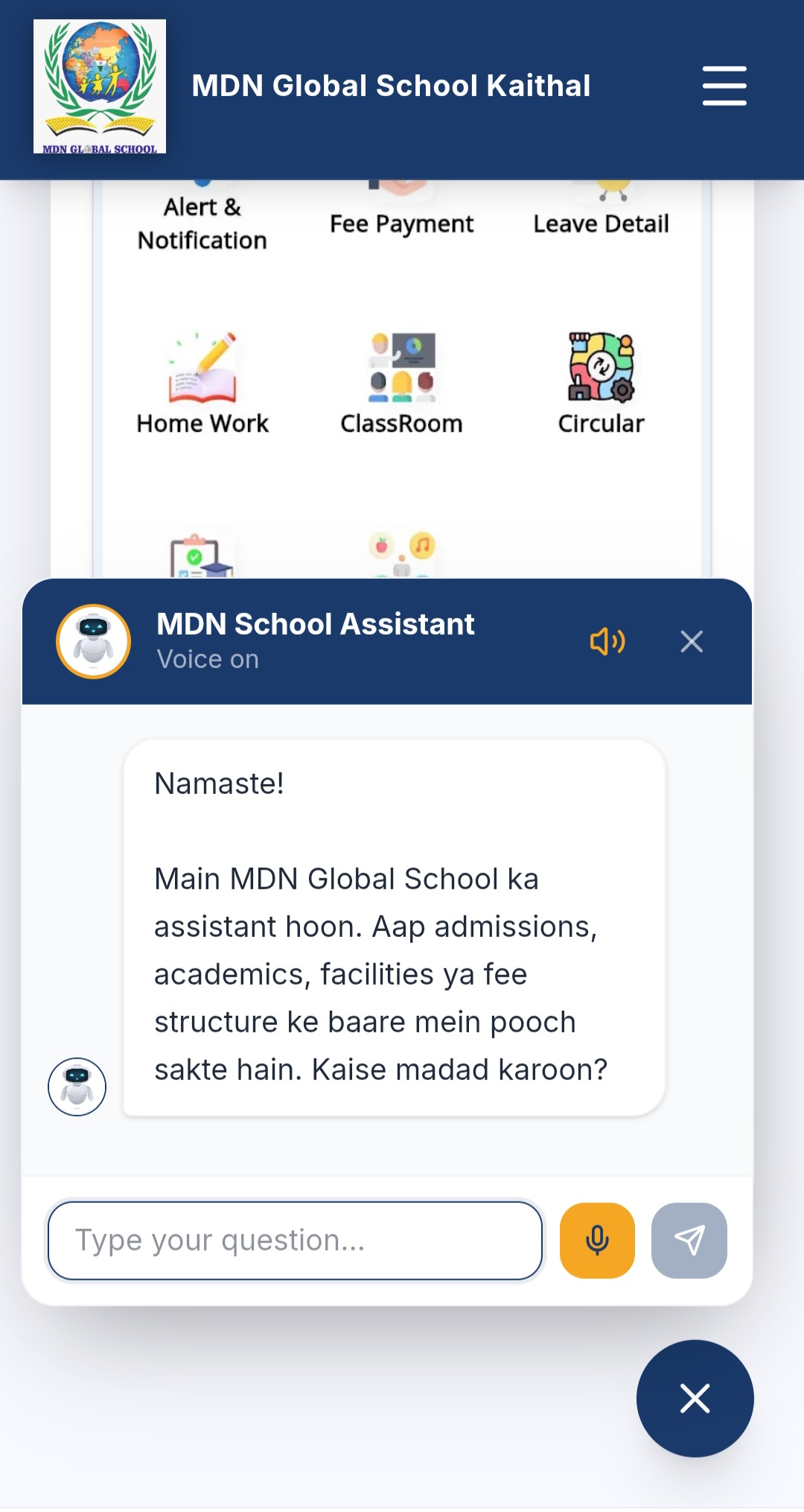
Chatbot powered by the Groq API
The website has a chatbot that answers parent questions instantly — about admissions, fees, documents and timings. It is powered by the Groq API, which runs large language models extremely fast.
Behind the scenes, the chatbot sends the user's question to Groq with a system prompt that contains the school's real information. Groq's speed means answers appear in about a second, which makes the bot feel genuinely helpful rather than gimmicky.
The AI robot tour
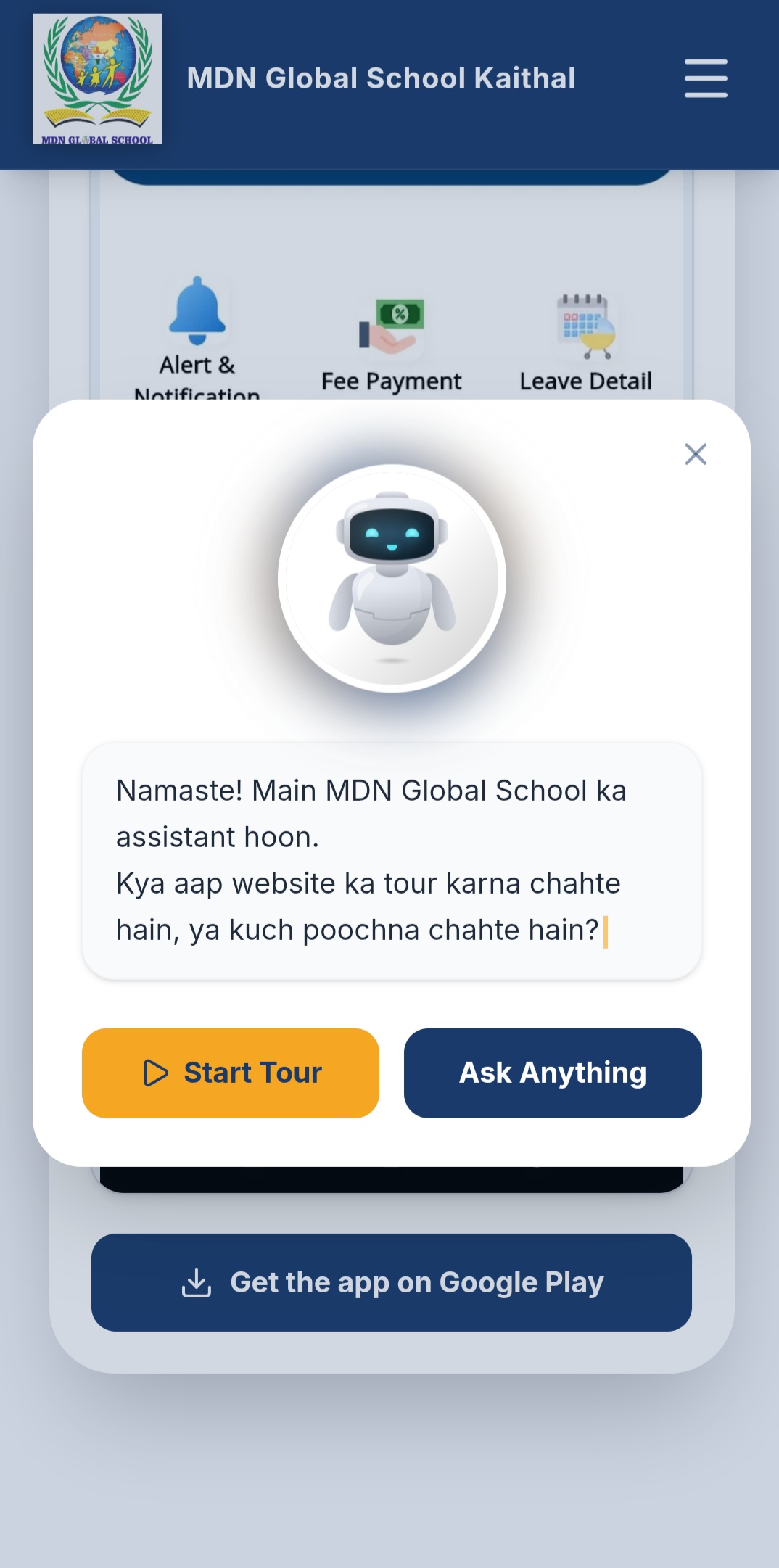
A friendly robot character walks visitors through the website and explains each section — what the school offers, how admissions work and where to find everything. It makes the site feel approachable for parents who are not comfortable navigating websites.
Working form with the Resend API
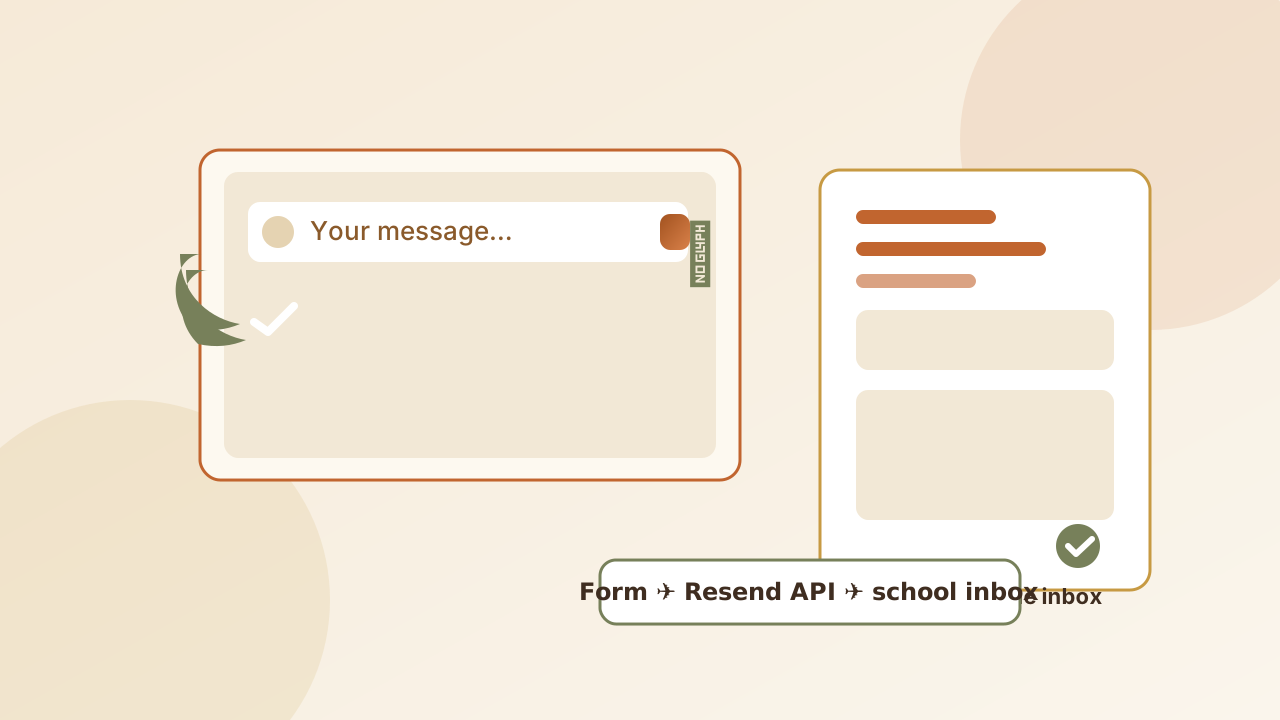
The contact and enquiry form does not just look good — it really works. When a parent submits the form, the details are sent through the Resend API, a simple email service for developers. Resend transports the message straight to the school's inbox, and the parent gets a confirmation too.
The loop that made it possible
My process was simple and repetitive: describe a section, look at the live preview, point out what looked off, let opencode fix it, repeat. Every error I hit was just a message back to the tool instead of hours of debugging.